How Much is a 4 Carat Diamond? Complete 2026 Price Guide
Discover 4 carat diamond prices for all cuts and qualities. Expert analysis on cost factors and how to get the best value in 2026.


Founder of TheCaratCut. Director and software engineer with experience leading software for UFC, Al Jazeera, AMCN, The Economist, and The NHS. Director at Wayfinity, founder of Seat and Stone, and runs The Developer Safe Place mentorship community. Not a GIA-certified gemologist — articles draw on grading reports, retailer data, and personal research, and may be assisted by AI tools for drafting with human review before publication.
Last reviewed and updated 14 October 2026 by The Carat Cut editorial team. The live prices on this page are read from retailer listings each month by our Diamond Price Tracker.
Key takeaways
- •Natural 4 carat diamonds (G colour, VS2 clarity, Excellent cut) typically run $65,000–$90,000 in 2026.
- •Lab-grown 4 carat stones at the same spec cost $1,500–$2,500 — roughly 2–3% of natural.
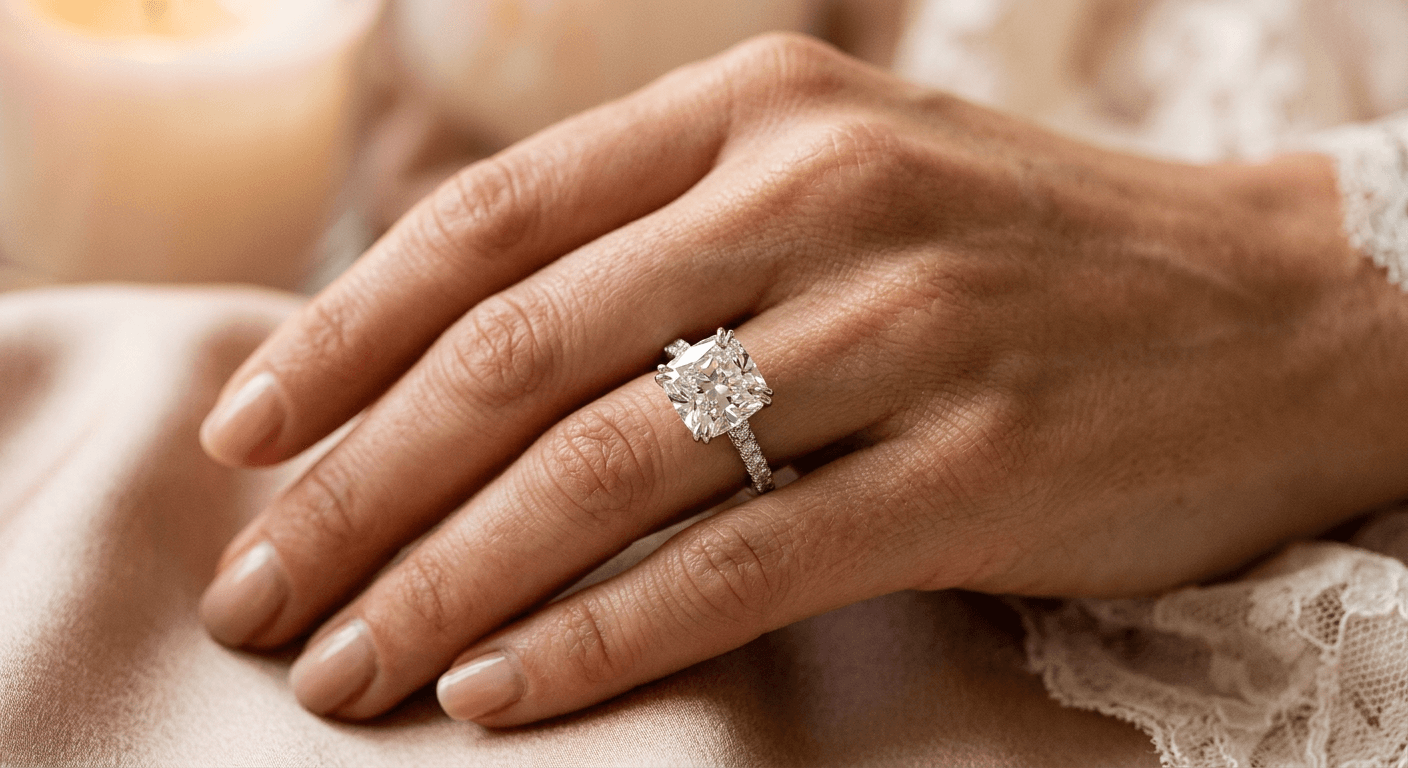
- •A 4 carat round measures ~10.2 mm — about 60% of an average finger’s width.
- •At 4 carats, every flaw is magnified. Clarity floor is VS2; cut grade must be Excellent / Ideal.
A 4 carat diamond is undeniably bold. Natural stones at this size carry steep scarcity premiums — clean rough yielding 4 carat polished diamonds is exceptional. Lab-grown 4 carat stones, conversely, have become genuinely affordable as production has matured. This guide breaks down 2026 pricing across grades and shapes.
How much does a 4 carat diamond cost?
Below are typical 2026 advertised list prices for round-brilliant cut 4.00 ct stones. Setting cost is excluded.
| Colour & Clarity (Excellent cut) | Lab-grown (typical) | Natural (typical) |
|---|---|---|
| D / VVS1 | $5,000 – $6,500 | $160,000 – $230,000 |
| F / VS1 | $3,200 – $4,200 | $95,000 – $130,000 |
| G / VS2 | $2,000 – $2,800 | $65,000 – $90,000 |
| I / SI1 | $1,500 – $1,900 | $40,000 – $55,000 |
Typical ranges are editorial estimates drawn from advertised list prices at Blue Nile, Brilliant Earth, Clean Origin and Rare Carat, not a live feed; the dated sample below is. Round brilliant, GIA / IGI certified, Excellent cut.
Live sampled prices
The table shows the lowest advertised price for a 4.00 ct round G/VS1 stone in Ideal or Excellent cut at each retailer we can read automatically, lab-grown and natural, on the date shown. The notes say how many stones matched, and a retailer that listed none at this exact weight and grade shows no price rather than a substitute. Natural stones at this size and grade are genuinely scarce, so an empty natural row is itself information. In our May 2026 sample every branded retailer listed above the Rare Carat marketplace median (see the tracker history), so treat these as reference prices rather than a market floor.
Live sampled prices: 4 carat round, G VS1
Lowest in-spec listing per retailer, lab-grown and natural. Re-sampled monthly.
| Retailer | Lowest price | Notes |
|---|---|---|
| Brilliant Earth | $3,650 | 36 in-spec stones listed, median $3,700. Ideal and Super Ideal cuts, 4.00–4.05 ct, read from Brilliant Earth's product feed. |
| Retailer | Lowest price | Notes |
|---|---|---|
| Blue NileLowest | $81,654 | 7 in-spec stones listed, median $103,158. Excellent and Ideal cuts, 4.00–4.05 ct, read from Blue Nile's listing (all 7 matches shown). |
| Brilliant Earth | $88,850 | 1 in-spec stone listed, median $88,850. Ideal and Super Ideal cuts, 4.00–4.05 ct, read from Brilliant Earth's product feed. |
The 4-carat rules: every flaw is magnified
At 4 carats, the table facet is enormous. Inclusions, body colour, and cut imperfections that hide in a 1 carat stone become obvious. Three non-negotiables:
- Cut: Excellent / Ideal only. A poorly-cut 4 carat looks like a paperweight. Cut grade is the single largest visual quality lever at this size.
- Clarity: VS2 floor. SI inclusions are visible to the naked eye through the large table. SI1 only with HD-video verification of inclusion location.
- Colour: H or better in white metal. I and J grades read visibly warm at 4 carats. Yellow / rose gold settings tolerate I; never go below.
Lab-grown vs natural at 4 carats
The price gap is at its most extreme at 4 carats. A premium G/VS2 lab-grown 4 ct stone now costs roughly 2–3% of the natural equivalent.
- Choose lab-grown for maximum face-up impact at a fraction of natural pricing — ideal if heirloom value isn't the priority.
- Choose natural if you treat the stone as a long-term store of value or want true scarcity premium.
For broader market context see our Lab Diamond Price Shopper's Guide.
Shape changes the price by 20–35%
Fancy shapes preserve more rough during cutting, which lowers per-carat price.
- Round brilliant — baseline, maximum sparkle, highest price
- Oval — looks ~15% larger face-up, ~20% lower price
- Cushion — soft antique look, ~25% lower price
- Emerald — elongated step-cut, ~30% lower price (clarity-sensitive)
- Pear — flattering elongation, ~25% lower price
Where to buy a 4 carat diamond
A 4 carat stone should never be bought without high-resolution video inspection. Start with our Blue Nile review and Brilliant Earth review to understand what each retailer offers at this size. Our recommended options:
Brilliant Earth
Brilliant Earth names every loose stone by its cut grade (Ideal or Super Ideal), colour and clarity, which is what lets us sample it automatically: the Brilliant Earth prices above come straight from its listings. Filter its loose-stone search to the exact grade you want and compare what you see against the dated figure before you buy.
Blue Nile
Largest natural-diamond inventory online with a Price Match Guarantee. Best for natural-only sourcing depth at this size.
Whiteflash
For natural-only buyers prioritising cut precision, Whiteflash's A CUT ABOVE inventory is the gold standard for super-ideal proportions.
Visit WhiteflashA CUT ABOVE super-ideal inventoryVisit →Frequently asked questions
How big does a 4 carat diamond look on the hand?
A 4 carat round brilliant measures ~10.2 mm in diameter — covering roughly 60% of an average finger's width. It is a major statement piece, impossible to overlook.
Is a 4 carat lab diamond worth buying?
For visual impact at a fraction of natural pricing, yes. A premium 4 carat lab-grown stone costs roughly 2–3% of an equivalent natural. The trade-off is minimal resale value in the secondary market.
How much does a 4 carat ring cost in total?
The setting typically adds $2,500–$8,000 in platinum or 18k gold. Total ring price for a lab-grown 4 carat: $4,000–$10,000. Total for a natural G/VS2 4 carat: $68,000–$100,000.
What's the best cut shape for a 4 carat diamond?
Round brilliant maximises sparkle but costs the most per carat. Oval and cushion preserve face-up size while saving 20–30%. Step cuts (emerald, Asscher) emphasise inclusions — only buy in VS1 or higher.
Do natural 4 carat diamonds hold their value?
High-grade natural 4 carat diamonds (D-F colour, VVS+ clarity, Excellent cut, GIA certified) tend to retain value reasonably in the secondary market. Lower-grade naturals and lab-grown 4 carat diamonds do not.
How much does a 4 carat diamond ring cost in the UK or Australia?
UK jewellery buyers convert our USD figures to GBP at the live exchange rate and add 20% VAT on imports over £135, so a US$60,000 natural 4 carat stone lands at roughly £56,000 once duty is paid. Australian buyers add 10% GST on orders over A$1,000 plus a customs entry fee — that same stone clears for around A$98,000. The GIA grading scale (D–Z colour, FL–I3 clarity) is universal, so a G/VS1 4 carat is the same stone in London, Sydney, Toronto and New York.
Always verify a GIA or IGI certificate before purchase. Our diamond certification guide explains how grading labs differ and which reports give the most reliable data at large carat weights. At 4 carats, never buy uncertified — minor grade discrepancies translate to tens of thousands of dollars.
If you want to verify that a stone is what the certificate claims, our guide on how to tell if a diamond is real covers both at-home and professional testing methods.
More diamond pricing guides
Diamond Price Per Carat — Complete Hub
The full pricing hub spanning every popular carat weight, with shape, colour and clarity breakdowns.
1.5 Carat Diamond Price Guide
Sweet-spot size between 1 and 2 carat — typical pricing, magic-weight tips and retailer comparison.
2 Carat Diamond Price Guide
The threshold where natural prices climb steeply. Lab vs natural and shape pricing breakdown.
2.5 Carat Diamond Price Guide
Statement-piece sizing. Where to compromise on grades and how to verify retailer pricing.
3 Carat Diamond Price Guide
Major-statement carat weight. Per-carat pricing scales geometrically — see live retailer data.
5 Carat Diamond Price Guide
The luxury tier. Investment-grade naturals vs lab-grown alternatives at sub-$10k.
Live Diamond Price Tracker
Monthly-sampled retailer pricing across major lab and natural diamond specs.
Written and edited by David Adams, founder of TheCaratCut. Our recommendations follow our editorial policy. We may earn commissions through affiliate links — see our disclosure.