Ear Piercing Pain Chart (Ranked 1-10) | Which Hurt Most?
How bad does a Tragus piercing hurt? We rank every ear piercing by pain level from "Breeze" to "Ouch" so you can prepare.


Our team of certified gemologists and jewelry experts provides in-depth analysis to help you make informed purchasing decisions.
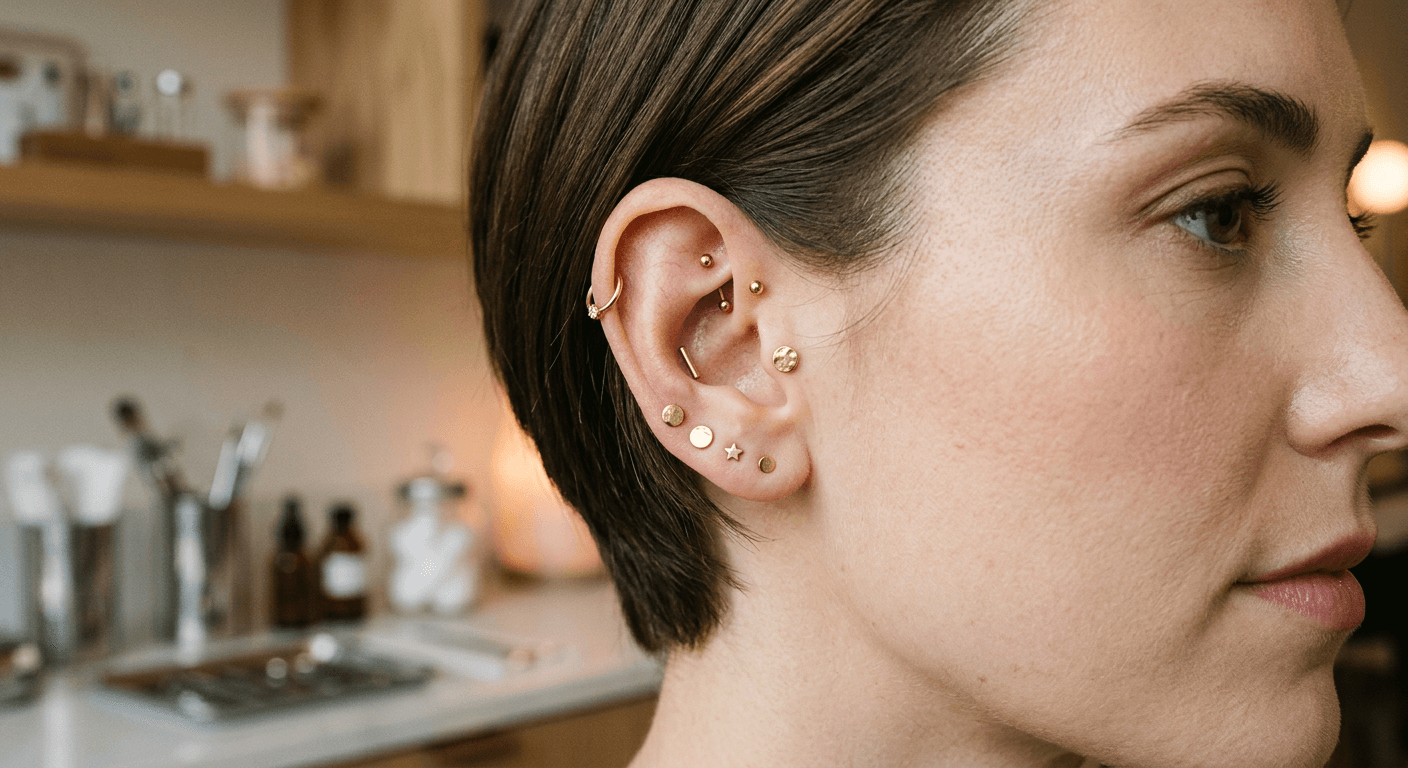
Ear Piercing Pain Chart: Ranked 1 to 10 (Most to Least Painful)
Pain is subjective. A pinch to one person is agony to another. However, anatomy is universal. Piercing through thick, dense cartilage will always trigger more nerves than piercing through soft fleshy lobes.
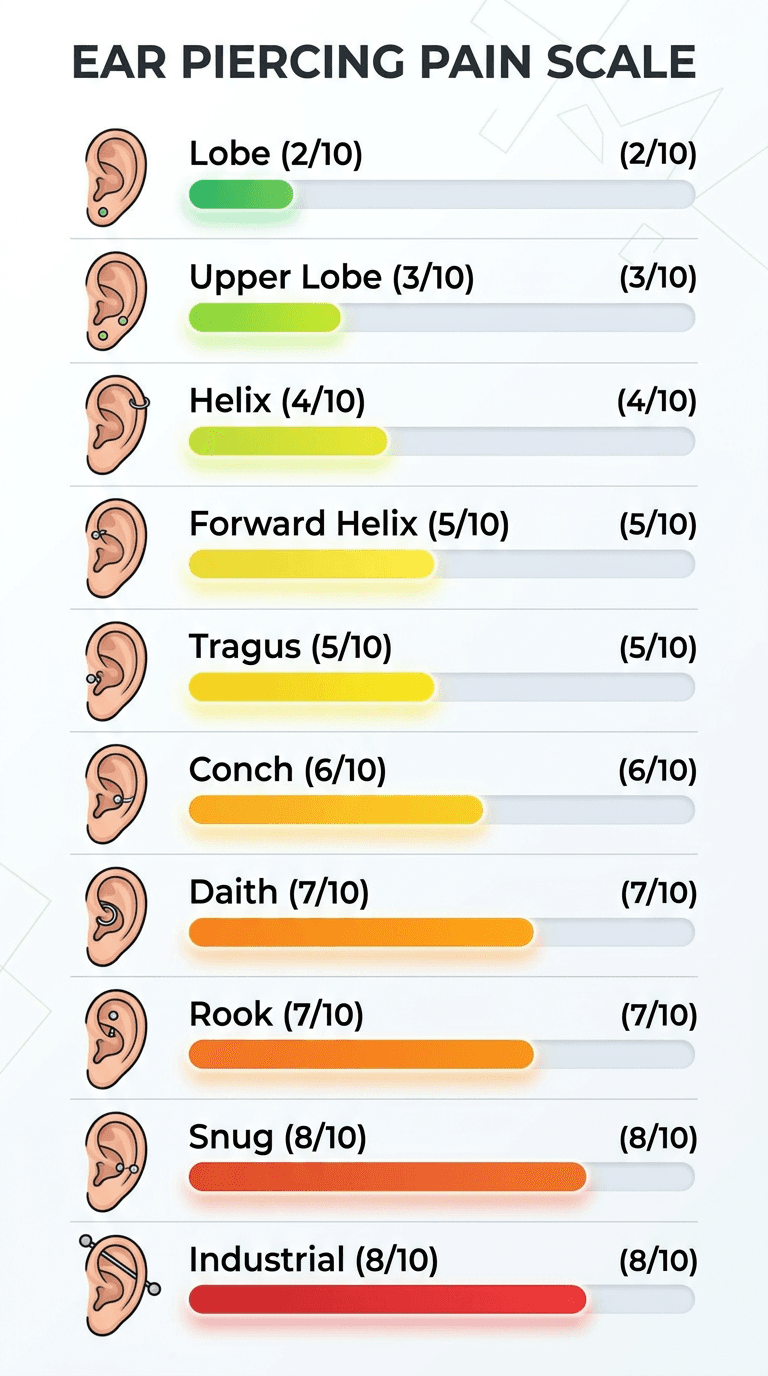
Here is the realistic pain scale for ear piercings.
The "Breeze" Zone (1-3/10)
These happen so fast you barely register them.
- Standard Lobe (1/10): A quick pinch like a fingernail nip.
- Upper Lobe (2/10): Slightly sharper than the standard lobe, but still minimal.
The "Sting" Zone (4-6/10)
These hurt, but it's over in a second. The sensation is often more "heat" or "pressure" than sharp pain.
- Helix (4/10): The classic cartilage piercing. It feels like a sharp sting, followed by throbbing heat for about 20 minutes.
- Tragus (5/10): The pain isn't bad, but the psychological factor is high. Because the needle is so close to your eardrum, you will hear a distinct "pop" or "crunch" sound as it passes through.
- Conch (6/10): This is piercing through the thickest part of the ear cup. It feels like deep, heavy pressure.
The "Ouch" Zone (7-9/10)
These are for the committed. Deep breathing required.
- Rook (7/10): The rook goes through a very thick fold of cartilage. The needle moves slower here, meaning the pain lasts a few seconds longer.
- Industrial (8/10): It's not that the individual hole hurts more—it's that you have to do it twice in one sitting. By the time the adrenaline wears off from the first hole, the needle is going through the second one.
- Snug (9/10): The King of Pain. The Snug goes through an extraordinarily thick and tight ridge of cartilage. It is intense during the piercing and tends to swell significantly during healing.
Healing Pain vs. Piercing Pain
The needle is only 1 second of your life. The healing is months.
- Sleeping: Generally, Cartilage piercings (Helix, Industrial) hurt more after the fact because you cannot sleep on that side for months.
- Masks/Glasses: If you wear glasses, a Forward Helix can be constantly irritated, causing low-grade chronic pain.
Summary
Don't let the chart scare you. The pain is temporary; the sparkle is permanent. If you are nervous, start with a Lobe or standard Helix.
Recommended Piercing Care
Ensure your piercings heal perfectly and stay organized with these essentials:
- VANERIA Piercing Aftercare Spray: Gentle, sterile saline solution to speed up healing and prevent infection.
- SHUNKAIZS 2-Tier Tangle-Free Jewelry Stand: A sleek, tangle-free display with two tiers perfect for organizing necklaces, bracelets, and watches without knots.
Frequently Asked Questions
Does a piercing gun or needle hurt more?
A piercing gun uses blunt force to push a stud through the ear, which causes significant tissue trauma and throbbing pain afterwards. A professional hollow needle is razor-sharp and slices cleanly through the tissue, resulting in less pain during the procedure and a much easier healing process.
Can I use numbing cream?
You can, but it is rarely recommended. Numbing creams constrict blood vessels and can slightly distort the tissue, potentially affecting the angle of the piercing. Since the actual piercing pain lasts only a second, most piercers believe the cream is unnecessary.
Why does my piercing hurt months later?
Cartilage piercings heal from the outside in. Even if it looks fine, the interior channel is still fragile. If it hurts suddenly after months, you likely slept on it or snagged it, causing clear trauma to the healing fistula.
Which piercing is the least painful?
The standard earlobe is universally considered the least painful (1/10). It is fleshy and fatty, offering little resistance to the needle. The most painful is typically the Snug or Anti-Tragus (9/10) due to the thickness of the cartilage in those areas.
Written by the TheCaratCut Editorial Team. Our recommendations follow our editorial policy. We may earn commissions through affiliate links — see our disclosure.