Ear Piercing Chart (2026) | Names & Healing Times
What is that piercing called? Identify every ear piercing (Helix, Tragus, Rook, Daith, Conch) with our complete visual chart and healing guide.


Founder of TheCaratCut. Director and software engineer with experience leading software for UFC, Al Jazeera, AMCN, The Economist, and The NHS. Director at Wayfinity, founder of Seat and Stone, and runs The Developer Safe Place mentorship community. Not a GIA-certified gemologist — articles draw on grading reports, retailer data, and personal research, and may be assisted by AI tools for drafting with human review before publication.
Ear Piercing Chart: Every Placement Explained (Visual Guide)
Data last verified on 30 March 2026 by The Carat Cut team.
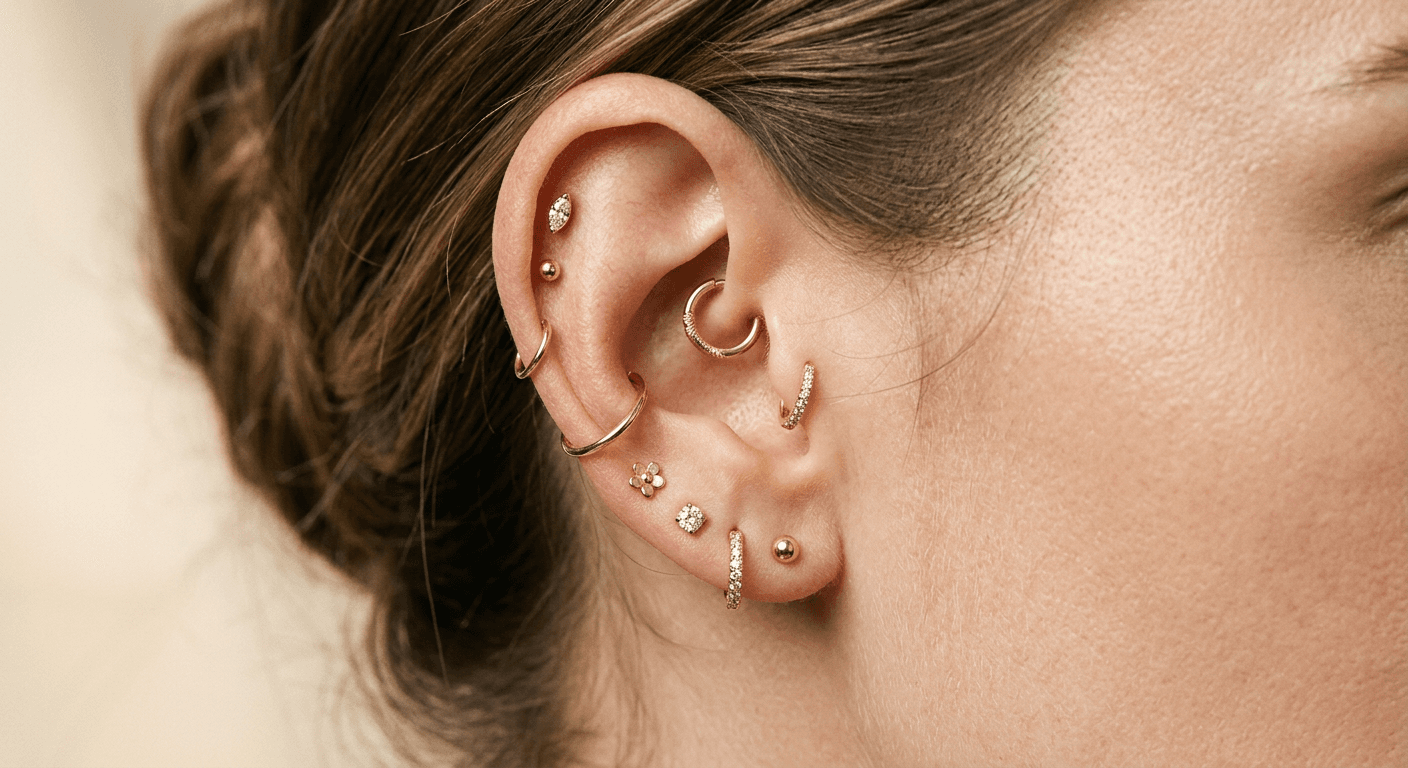
Gone are the days of a single lobe piercing. The "Curated Ear"—a carefully designed constellation of studs and hoops—is the standard. But navigating the anatomy of the ear can be confusing. What is the difference between a Rook and a Daith? Which one is the Snug?
Here is the definitive chart of ear piercings, organized by location and healing difficulty.
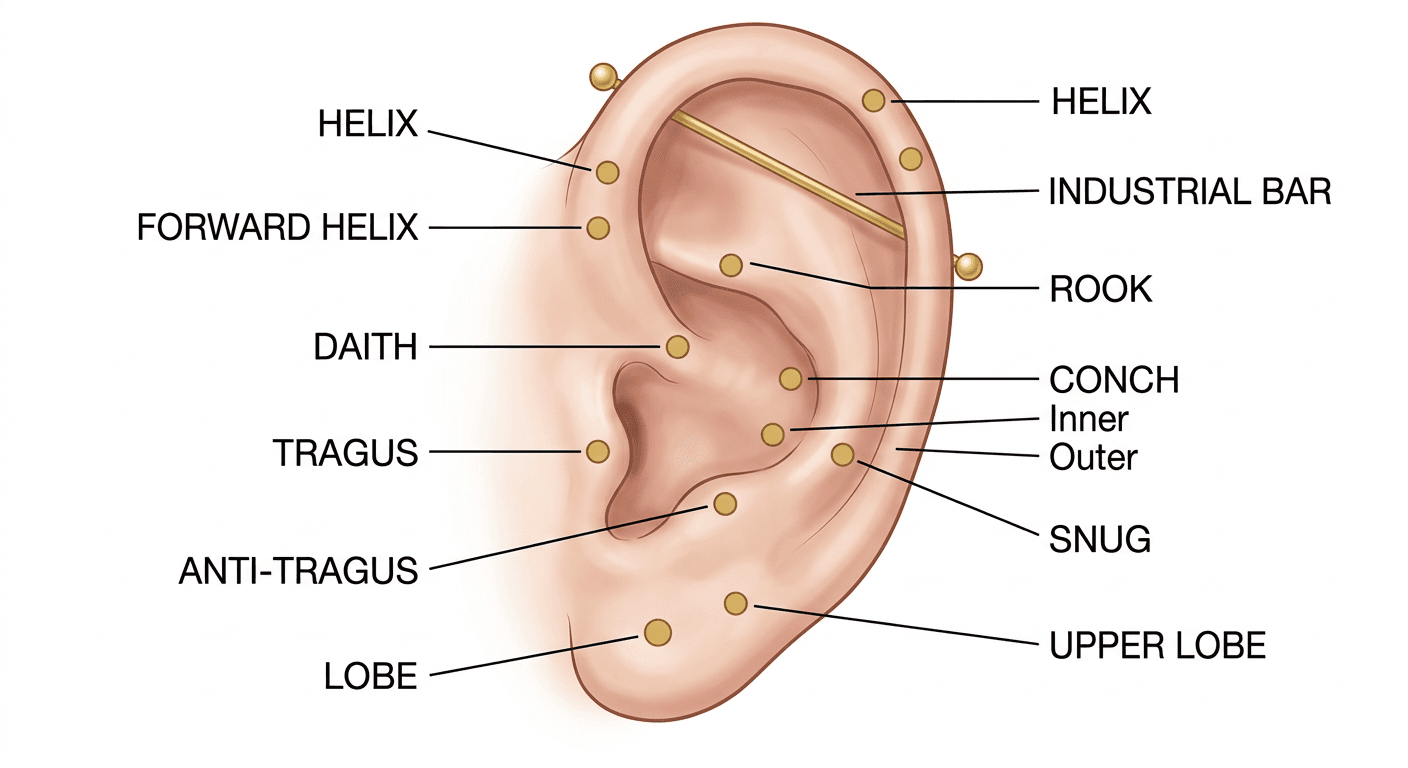
2026 Ear Piercing Healing & Pain Chart
| Piercing Location | Pain Level (1-10) | Average Healing Time | Tissue Type |
|---|---|---|---|
| Standard / Upper Lobe | 1 - 2 | 6 - 8 Weeks | Fleshy |
| Helix (Outer Edge) | 4 | 6 - 9 Months | Cartilage |
| Tragus (Inner Flap) | 5 | 6 - 12 Months | Thick Cartilage |
| Daith (Inner Curve) | 6 | 9 - 12 Months | Thick Cartilage |
| Rook (Upper Inner Fold) | 6 | 10 - 18 Months | Thick Cartilage |
| Conch (Center Bowl) | 5 | 6 - 9 Months | Flat Cartilage |
| Industrial (Double Point) | 7 | 9 - 12+ Months | Cartilage |
| Snug (Inner Ridge) | 8 | 12 - 18+ Months | Thick Folded Cartilage |
Lobe Piercings (The Classics)
The lobe is soft, fleshy tissue. It has excellent blood flow, meaning it heals faster than any other part of the ear.
- Standard Lobe: The center of the earlobe.
- Pain Level: 1/10
- Healing: 6-8 weeks.
- Upper Lobe: Any piercing placed directly above the standard lobe, before the cartilage starts.
- Pain Level: 2/10
- Healing: 6-10 weeks.
- Transverse Lobe: A horizontal bar that goes through the flesh of the lobe horizontally rather than front-to-back.
- Pain Level: 4/10
- Healing: 3-5 months.
Outer Cartilage (The Edge)
The rim of the ear is cartilage. Pain is higher, and healing is much slower because cartilage has poor blood flow.
- Helix: Any piercing on the upper outer rim. The most common cartilage piercing.
- Pain Level: 4/10 (A sharp pinch).
- Healing: 6-9 months.
- Forward Helix: The outer rim where it curves forward to attach to the head.
- Pain Level: 5/10.
- Healing: 6-9 months.
- Industrial: A long barbell connecting two helix piercings (usually top and back).
- Pain Level: 7/10 (Two holes at once).
- Healing: 9-12 months.
- Auricle: The middle of the outer rim (between the helix and the lobe).
- Pain Level: 4/10.
- Healing: 6-9 months.
Inner Cartilage (The Folds)
These piercings sit inside the shell of the ear. They are protected but painful.
- Daith: The innermost fold of cartilage right above the ear canal. (Often cited for migraine relief, though this is anecdotal).
- Pain Level: 6/10 (Dull pressure).
- Healing: 6-9 months.
- Rook: The upper inner ridge of cartilage above the Daith.
- Pain Level: 7/10 (High pressure).
- Healing: 6-10 months.
- Tragus: The small flap of cartilage covering the ear canal entrance.
- Pain Level: 5/10 (You hear a "crunch").
- Healing: 4-8 months.
- Conch: The large inner bowl of the ear.
- Pain Level: 6/10.
- Healing: 6-9 months.
- Snug: The sharp ridge between the inner and outer ear. The hardest piercing to heal.
- Pain Level: 9/10.
- Healing: 12+ months.
Facial/Ear Adjacent
- Surface Tragus: A surface bar placed vertically in front of the ear (on the face side).
- Type: Surface piercing (High rejection rate).
- Healing: 6-12 months.
Recommended Piercing Care
Ensure your piercings heal perfectly and stay organized with these essentials:
- VANERIA Piercing Aftercare Spray: Gentle, sterile saline solution to speed up healing and prevent infection.
Frequently Asked Questions
Which ear piercing heals the fastest?
The standard lobe piercing is the fastest healer, typically taking 6-8 weeks. The lobe is soft tissue with excellent blood flow, which aids recovery. In contrast, cartilage piercings (like the Helix or conch) have poor blood flow and take 6-12 months to fully heal.
What is a "Constellation" piercing?
"Constellation" refers to a styling trend rather than a specific anatomical location. It involves placing multiple piercings (usually on the lobe and cartilage) in a unique, scattered pattern that resembles a star constellation, rather than the traditional straight line.
Can I get multiple piercings at once?
Yes, but there is a limit. Most reputable piercers recommend a maximum of 3 piercings in a single session. Healing multiple wounds simultaneously stresses your immune system, which can prolong the healing time for all of them and increase swelling.
Does the Daith piercing cure migraines?
There is no scientific evidence to support this claim. While many people anecdotally report relief (possibly due to the placebo effect or acupuncture pressure points), medical professionals do not recognize it as a treatment. You should get a Daith piercing because you love the aesthetic, not as a guaranteed medical cure.
Are ear-piercing rules the same in the UK and Australia?
The anatomy and healing times are identical worldwide, but local regulation differs. UK studios must register under the Local Government (Miscellaneous Provisions) Act and many councils require council licensing for jewellery piercing. Australian piercers must hold a state Skin Penetration Permit issued by the local health authority. If you are buying body jewellery internationally, look for nickel-free implant-grade titanium (ASTM F136) — the EU's REACH nickel directive is the strictest standard in the world and pieces stamped "REACH compliant" are safe everywhere.
Written and edited by David Adams, founder of TheCaratCut. Our recommendations follow our editorial policy. We may earn commissions through affiliate links — see our disclosure.