Mood Ring Colors Meaning: The Complete Chart (2026)
Complete mood ring color chart: what every color means (blue, green, black, purple, yellow) and the real science behind how they change.


Founder of TheCaratCut. Director and software engineer with experience leading software for UFC, Al Jazeera, AMCN, The Economist, and The NHS. Director at Wayfinity, founder of Seat and Stone, and runs The Developer Safe Place mentorship community. Not a GIA-certified gemologist, and nothing here has been bought or tested — articles draw on retailers' published policies, prices and certificates and on customer-review sites. Most were first drafted with AI tools and are being re-checked against their sources, with AI help; every correction is approved by David before it goes live.
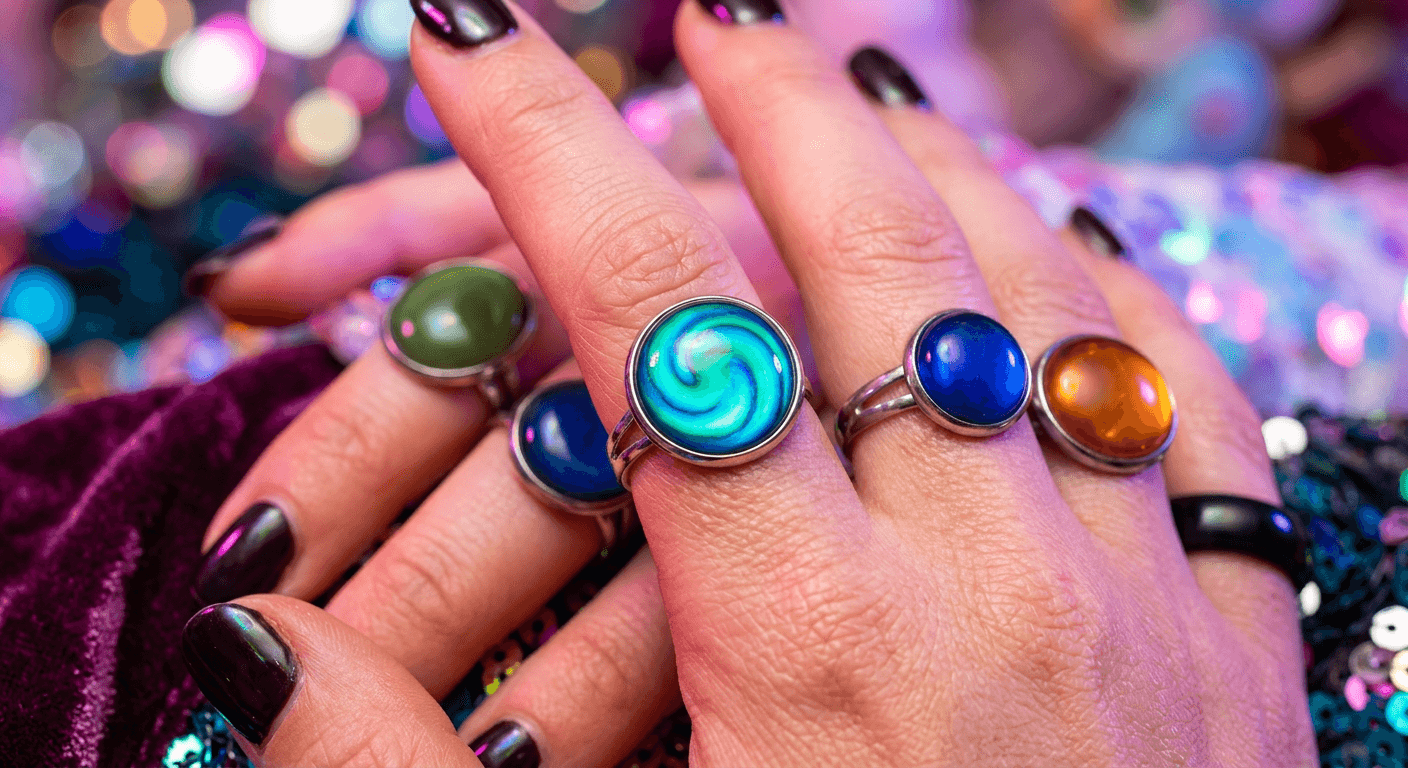
Mood Ring Colors Meaning: The Complete Chart
Mood rings are a 1970s nostalgia item. Whether you bought one at a museum gift shop or found a vintage 70s piece, the magic is the same: the stone changes color based on... something. The ring went on sale in 1975; Lawrence Livermore National Laboratory's history page says the idea "is mostly attributed" to Josh Reynolds, a New York businessman, and that no patents were filed (LLNL, "LLNL and the mood ring", checked 17 November 2026). The chemist Anne Helmenstine names two New York inventors, Maris Ambats and Josh Reynolds (Science Notes, updated 24 June 2025, checked 17 November 2026).
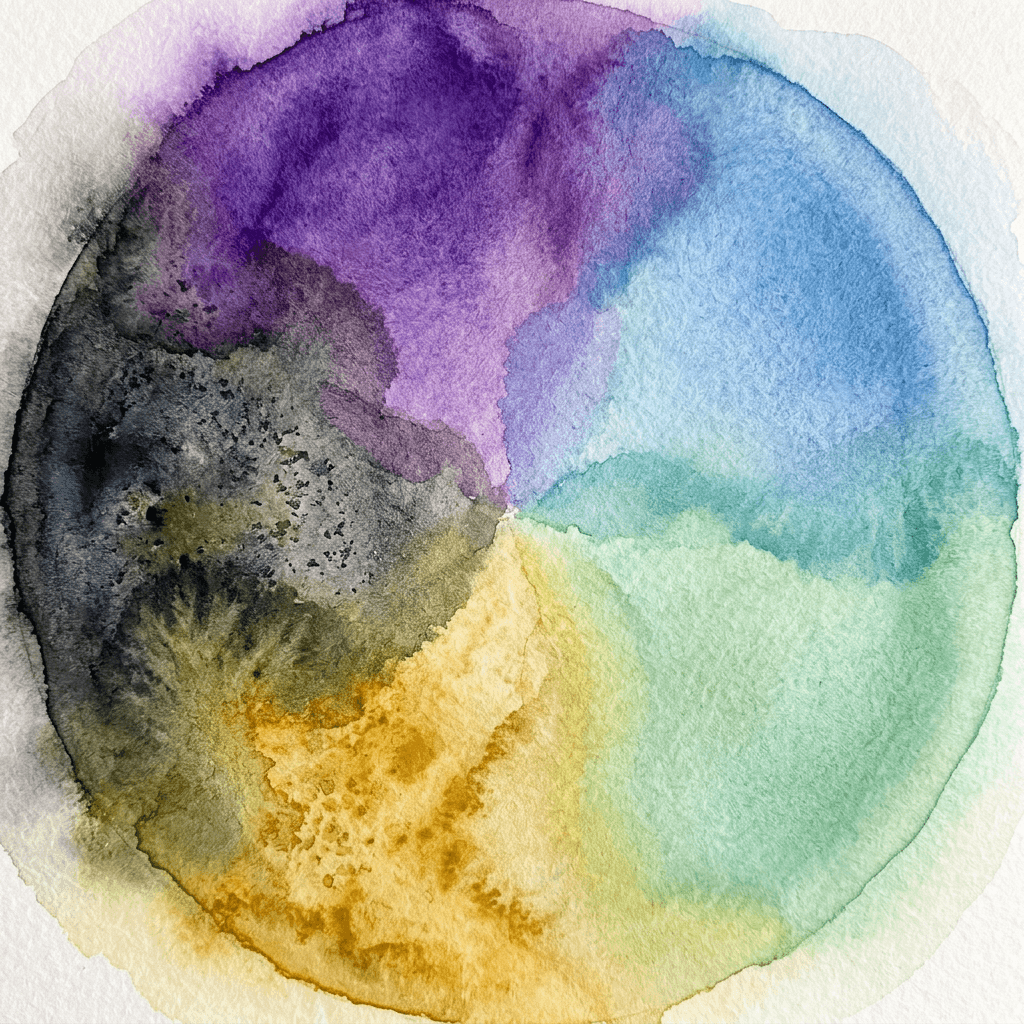
Here is the breakdown of what the colors supposedly mean. The color-to-mood pairing is a selling convention, not a scientific finding. The meanings below follow the chart Helmenstine gives for traditional mood rings in the same Science Notes article; she adds that "some companies just make up their charts", so the card that came with your ring may differ.
The Color Chart (Meanings)
| Color | Emotional State | Body Temperature |
|---|---|---|
| Violet / Dark Blue | Passionate, Excited, Energetic | Very Warm |
| Blue | Relaxed, Calm, Comfortable | Warm (Normal) |
| Green | Average, Awake, Alert | Neutral |
| Amber / Yellow | Unsettled, Anxious (amber); Unhappy (yellow) | Cool |
| Black / Brown | Stressed, Upset (or the ring is cold or broken) | Cold |
Do They Really Work?
Scientific Answer: No. They do not measure mood. They measure Temperature. The stone sits over thermochromic liquid crystals, which "change color with temperature" (Science Notes). Heating or cooling the crystals changes the spacing between them, and the color of the light they reflect depends on that spacing, writes Chris Woodford at Explain that Stuff (updated 30 July 2023), checked 17 November 2026. The ring is reading the temperature of your finger.
Physiological Answer: Partly. When you are stressed, the small blood vessels in your hands constrict and "your hands get cooler", says Aurora Health Care's biofeedback guide (checked 17 November 2026). This makes your fingers cold -> Black Ring. When you relax, the same guide says, the vessels open up and your hands get warmer -> Blue Ring. Science Notes says violet and pink stones "can indicate passion or extreme tension".
So it isn't magic, but it isn't a mood reading either. Helmenstine calls the chart "not a reliable indicator of emotions", partly because hands warm and cool for other reasons: hot weather can push the ring to its warm colors, and some people's hands simply run warmer or cooler (Science Notes).
Ruining a Mood Ring
Water is the enemy, and so is heat. "High temperature breaks a mood ring, but water can ruin it too," writes Helmenstine; too high a temperature "denatures and permanently ruins" the liquid crystals, and black is the color of a broken ring (Science Notes). She adds that some modern mood rings are sealed against moisture, "but many still can't get wet". Unless the seller says your ring is sealed, take it off before you wash your hands.
Recommended Mood Ring
This site has not bought, worn or tested any mood ring. The link below goes to one Amazon listing, and it is an affiliate link:
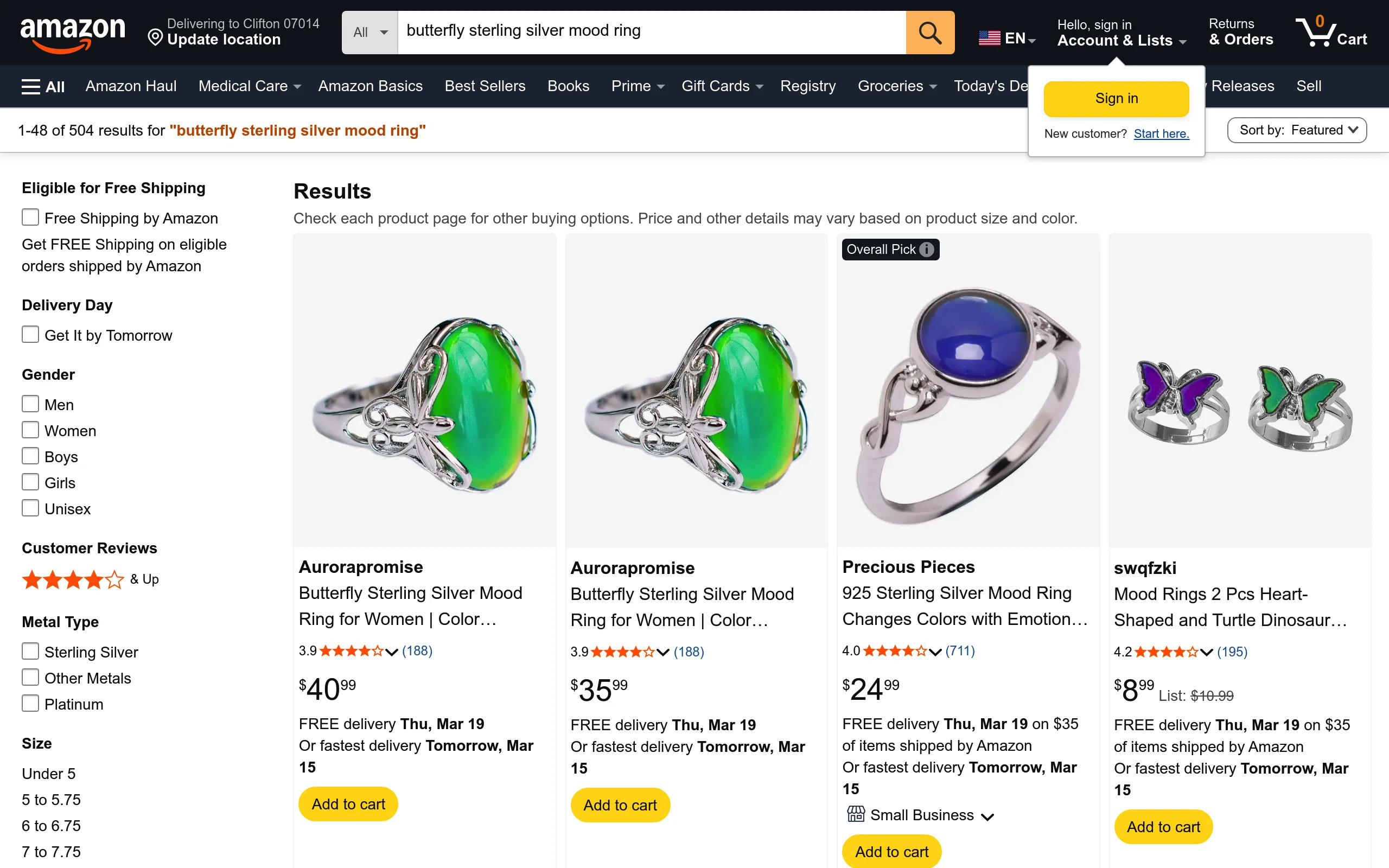
- Butterfly Sterling Silver Mood Ring: a single Amazon listing under the Aurorapromise name.
The image below is also an affiliate link. It opens an Amazon search results page for butterfly sterling silver mood rings, not a single product, and we have not vetted the rings that search returns.
Frequently Asked Questions
Why does my mood ring stay black? If your ring is permanently black, it is likely broken. Black is the ring's cold color and also the color of a broken mood ring, and both water and high heat can ruin the liquid crystals under the stone (Science Notes). Age does it too: the 1970s rings changed color for about two years before the crystals settled permanently into black, according to the Gale reference book Fashion, Costume, and Culture (checked 17 November 2026).
Do mood rings work on everyone? They work based on skin temperature, not psychic ability. Some people have naturally warmer or cooler hands, so a ring may sit at its cool colors (amber and yellow) or its warm ones regardless of mood. Most mood rings use liquid crystals that show blue a little below body temperature (98.6 °F or 37 °C), and green at the average temperature of your hands when you are awake and alert (Science Notes).
Are vintage mood rings worth money? They were mass-produced, which works against high prices. Lawrence Livermore National Laboratory's history page says the rings were "initially priced at more than $30 a piece", that the cost "almost immediately dropped as low as 30 cents", and that millions were made (LLNL). The crystals in the original rings gave color changes for about two years before settling into black (Fashion, Costume, and Culture), so a 1970s ring may no longer change color at all.
Can I fix a broken mood ring? Unfortunately, no. The color comes from how the liquid crystals are arranged, and too high a temperature "denatures and permanently ruins" them (Science Notes). Treat a ring that has stayed black since it got wet or hot as broken.
Correction, 17 November 2026: earlier versions of this guide gave the color chart with no source and said the ring is "biologically accurate"; the chart now follows the one published by Science Notes and is labelled as a convention, and the guide says the ring reads finger temperature, not mood. Earlier versions also said amber or yellow means nervous (the Science Notes chart gives that to pink), that the liquid crystals "twist" when heated, that a damaged ring's "chemical reaction is ruined" (the color change is not a chemical reaction), that a working vintage ring is worth 20 to 50 dollars (unsupported; removed), and called a linked Amazon ring "high-quality" although this site has not bought or tested it. Heat was added as a cause of damage alongside water.
Published by David Adams, founder of TheCaratCut. Most guides were first drafted with AI tools and are being re-checked against their sources, with AI help; every correction is approved by David before it goes live. Our recommendations follow our editorial policy. We may earn commissions through affiliate links — see our disclosure.