How Much Are My Pearls Worth? A Realistic Value Guide
Did you inherit a pearl necklace? Learn how to determine if your pearls are real, identifying the type, and estimating their true resale value.


Founder of TheCaratCut. Director and software engineer with experience leading software for UFC, Al Jazeera, AMCN, The Economist, and The NHS. Director at Wayfinity, founder of Seat and Stone, and runs The Developer Safe Place mentorship community. Not a GIA-certified gemologist — articles draw on grading reports, retailer data, and personal research, and may be assisted by AI tools for drafting with human review before publication.
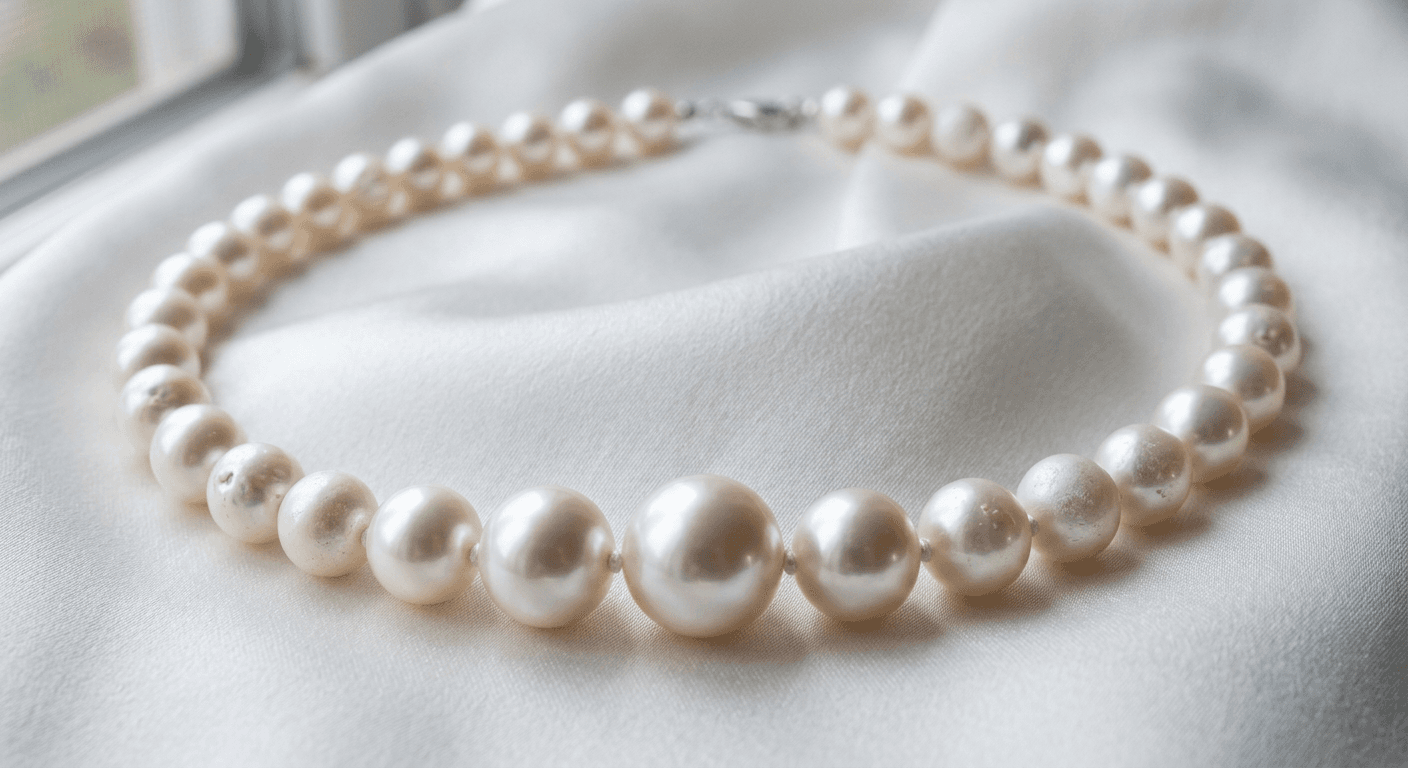
How Much Are My Pearls Worth? A Realistic Value Guide
So, you have inherited a strand of pearls from your grandmother, or found a dusty necklace at an estate sale. The inevitable question pops up: "Did I strike gold? Or is this just $5 costume jewelry?"
We have all seen Antiques Roadshow, where a woman finds out her grandmother's pearls are worth $50,000. It is a thrilling fantasy.
But here is the hard truth: Most vintage pearls on the market today are worth less than $100. However, the ones that are valuable are worth a fortune. The trick is knowing how to spot the difference.
Pearl Value Cheat Sheet
- •Retail vs. Resale: You will typically only get 20-30% of the original retail price when selling used pearls.
- •The Identity Rule: Saltwater (Akoya) holds value. Freshwater (common) usually does not.
- •The Brand Factor: A Mikimoto or Tiffany clasp can multiply the value by 10x instantly.
The 7 Value Factors (How Pros Grade Pearls)
Just like diamonds have the 4Cs, pearls are graded by the GIA (Gemological Institute of America) using 7 standard factors.
- Luster (Most Important): This is the sharpness of the reflection. If you look into the pearl, do you see your face like a mirror? That is high value. If it looks dull, chalky, or blurry, the value plummets.
- Size: Larger is rarer. Anything above 7.5mm starts to climb in price. Above 10mm (for round pearls) is serious money.
- Shape: Round is King. Off-round ("Potato") pearls are common and cheap.
- Surface: Are there pits, bumps, or cracks? Clean skin equals high value.
- Color: White with Rose overtones is the classic favorite.
- Nacre Quality: Is the coating thick? Can you see the bead through it (called "blinking")?
- Matching: Do all the pearls on the strand look identical?
Identification: The Type Determines the Price Tier
Before you pay for an appraisal, identifying the type of pearl will give you a rough ballpark.
Unsure what you have? Check our visual guide: Identify Your Pearls (Akoya, Freshwater, or Tahitian?)
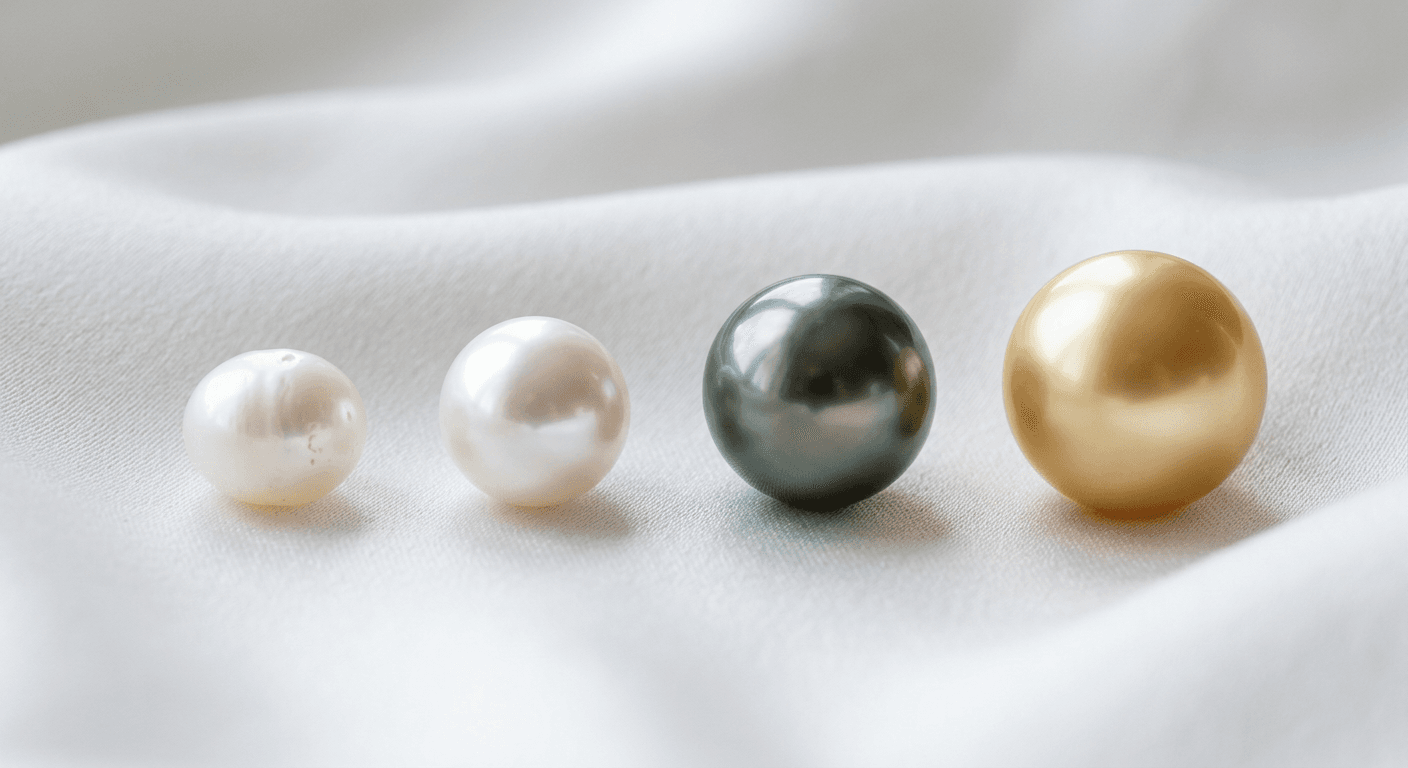
1. Freshwater Pearls (The Common Find)
- Likely Resale Value: $10 - $50
- How to spot: Often shaped like "rice" or "eggs," rarely perfectly round. Luster is satiny, not sharp. Produced by the ton in China. Unless they are top-tier metallic freshwater, they have little resale market.
2. Akoya Pearls (The Classic White)
- Likely Resale Value: $200 - $800+
- How to spot: Perfectly round. Sharp, ball-bearing reflection. Usually smaller (6mm - 8mm).
- The Verdict: These hold value well, especially if they are vintage Japanese strands.
3. South Sea & Tahitian (The Heavyweights)
- Likely Resale Value: $500 - $3,000+
- How to spot: Large (9mm+). Tahitian pearls are dark/gray. South Sea are White/Gold and satiny.
- The Verdict: High value due to rarity.
The "Strand" Factor: Brand Names Matter
A generic Akoya strand might sell for $400. That exact same strand with a "Mikimoto" signature on the clasp might sell for $4,000.
Look at the Clasp:
- The "M" Shell: Mikimoto's signature logo (an M inside an oyster shell outline).
- Tiffany & Co: Usually stamped clearly on a small tag near the clasp.
- Gold Stamp: Look for 14k, 18k, or 585/750. If the clasp is base metal or silver (925), the pearls are almost certainly low quality.
Is It Worth Appraising?
An official independent jewelry appraisal costs $100 - $150. If your strand is worth $50, you are losing money by appraising it.
Rule of Thumb: Do NOT appraise if:
- The pearls are "potato" shaped (oval/lumpy).
- The clasp is not gold.
- The surface is peeling or chalky.
Peeling pearls? Damage drastically reduces value. Keep pearls away from perfume, hairspray and ultrasonic cleaners, and wipe them with a soft damp cloth after wearing.
DO appraise if:
- They are perfectly round and larger than 7.5mm.
- The clasp has a luxury brand stamp.
- They are large black or gold pearls.
Where to Sell Your Pearls
So you have identified them as high-quality. How do you cash out?
- Private Buyers (eBay/Poshmark): Highest Payout. You do the work, you keep the margin. Good for branded items.
- Consignment Shops: Medium Payout. They take a 30-50% cut, but they handle the sale. Good for unbranded high-quality strands.
- Direct Refiners / Pawn Shops: Lowest Payout. They pay for the gold clasp and often scrap the pearls. Avoid this unless desperate.
Investing in Pearls That Hold Value
If you are buying today and want something that will be an heirloom tomorrow, avoid the "bargain bin" freshwater strands. Invest in High-Quality Akoya or White South Sea pearls. These represent the top tier of the harvest and historically retain desirability.
Pearl values in the UK, Australia and beyond
Pearl pricing is set on global wholesale markets (Hong Kong, Tokyo, Sydney) before retail markups, so a 7.5–8mm AAA Akoya strand should land within ±10% of our USD figures once you account for currency, VAT or GST. British jewellery buyers add 20% VAT plus import duty over £135; Australian shoppers pay 10% GST over A$1,000. Colour and lustre grades use the same Mikimoto-derived A/AA/AAA scale in London, Sydney, Toronto and New York — there is no separate "UK grade" or "AU grade". For insurance appraisals, both UK and Australian assessors use the same GIA pearl grading framework as US gemmologists.
Written and edited by David Adams, founder of TheCaratCut. Our recommendations follow our editorial policy. We may earn commissions through affiliate links — see our disclosure.